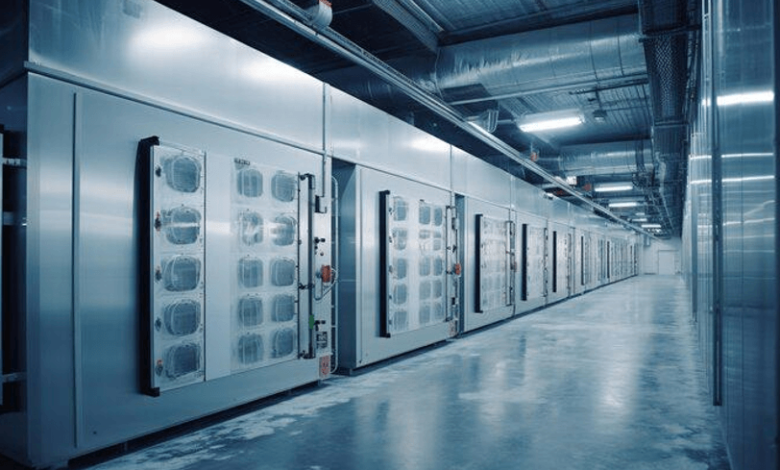
In Melbourne, people are shifting towards installing commercial coolrooms rather than standard refrigeration. The key reasons behind this shift are: strictly maintaining Australian food safety standards, thermal efficiency, optimised inventory controls, product preservation, customised internal layouts to maximise space, and higher durability with low maintenance cost.
Key Takeaways
- Instead of using a standard refrigerator, installing a commercial, customised coolroom is considered an energy-efficient and cost-effective choice for small food businesses in Melbourne.
- With features like advanced digital monitoring, optimised inventory control, and customised internal layouts, a cool room can reduce the spoilage of food materials to a great extent.
- To maintain the food safety standard rules and regulations in Australia, installing a coolroom is essential to avoid facing fines and forced closure for a business that deals with perishable goods.
A commercial coolroom is a large, walk-in space for storing and preserving perishable goods by controlling the temperature. Unlike household refrigerators, they are specially designed for high-volume storage to keep items fresh, safe, and organised.
Why Should You Install Commercial Coolrooms in Melbourne?
In a city like Melbourne, due to the high demand for reliable cold-chain storage and to meet the strict food safety standards, cool room installations are highly popular in the region.
1. Australian Food Safety Standards
To protect your business from facing an unwanted fine and forced closure, maintaining the food safety standards set by Food Standards Australia New Zealand (FSANZ) is crucial.
Businesses that use perishable goods or potentially hazardous food must maintain compliance with standard coolroom temperature.
- Supermarkets, grocery stores, and food retailers.
- Hotels, restaurants and cafes.
- Pharmacies and pharmaceutical distributors.
- Cold storage operators and wholesale food distributors
They must follow the specific guidelines about coolroom temperature.
2. Maximising Thermal Efficiency
The panels of a coolroom are made from polyurethane (PU), Polystyrene (EPS), and polyisocyanurate (PIR). They are known for their qualities, such as:
- Provides excellent thermal resistance.
- Cost-effective.
- Fire-resistance.
- Lightweight and durable.
These features help to keep the external heat away during the summer and preserve warmth in the winter, which is crucial for the safety of the perishable items.
3. Energy-efficiency
Commercial coolrooms in Melbourne are considered highly energy-efficient. It helps to lower the consumption of energy and ultimately leads to a lower electricity bill.
A highly insulated coolroom can reduce energy consumption approximately up to 20%, which can be helpful for small food businesses with a lower operational cost.
4. Optimised Inventory Control, Product Preservation, and Shrinkage Mitigation
To prevent food shrinkage, you need to regulate humidity tightly. For leafy greens, the relative humidity should be 90% to 95%, for fruits, the RH should be 85% to 90%, and for pharmaceutical products, the RH needs to be between 30% and 50%.
This inventory shrinkage prevents food spoilage, financial losses, and increases the trust and satisfaction level of the customer.
5. Customised Internal Layouts
You can customise the internal panels and layout during the cool room installation, and it depends on what type of product you are storing. For a commercial kitchen, pharmaceutical business, and agricultural product, the space optimisation will be different. You can customise the internal layout by:
- Adjustable wire shelves.
- Using drive-in and push-back racks.
- Using heavy-duty mobile racks.
- Using corrosion-resistant materials.
See also: Experienced Personal Injury Lawyers in Denver
6. Enhanced Asset Valuation
Coolrooms are suitable for maximising functional utility, energy efficiency, and market demand. You can convert a standard warehouse into temperature-controlled environments, which drastically boosts the asset’s intrinsic value.
7. Advanced Digital Monitoring
Coolrooms are highly popular among food business markets due to their advanced digital monitoring features. In this feature, multiple tools are used, such as:
- Wi-Fi monitoring system.
- Cellular or 4G connected system.
- Cloud-based compliance platform.
- Min-max thermometers and data loggers.
- Digital temperature display.
8. Low Maintenance and High Durability
With proper care, a commercial coolroom in Melbourne can last up to 15 to 20 years. Another benefit of a coolroom is that they are low-maintenance. With regular maintenance, the service life of your cool room can be extended in a hassle-free manner.
9. Anti-Condensation Glass Doors and High-CRI LED Lighting
The combination of heated glass doors and High CRI (Colour Rendering Index) LED lighting is perfect for retail merchandising. Together, these features can easily eliminate condensation, ensure true colour profiles, and directly drive impulse purchases.
10. Financial Incentives
To offset the upfront costs significantly, coolrooms provide you with various financial incentives, government grants and subsidies. In Australia, the Victorian Government initiative offers direct subsidies for businesses to upgrade old, energy-heavy refrigeration systems to modern, high-efficiency modular cold rooms and display cabinets.
The above-mentioned benefits are mostly the key reasons for food businesses in Melbourne to install a commercial coolroom instead of a standard refrigerator.
Planning to Install a Commercial Coolroom?
If you are planning to install a commercial coolroom, take the service from a professional and experienced coolroom company manufacturer to get the best quality service.