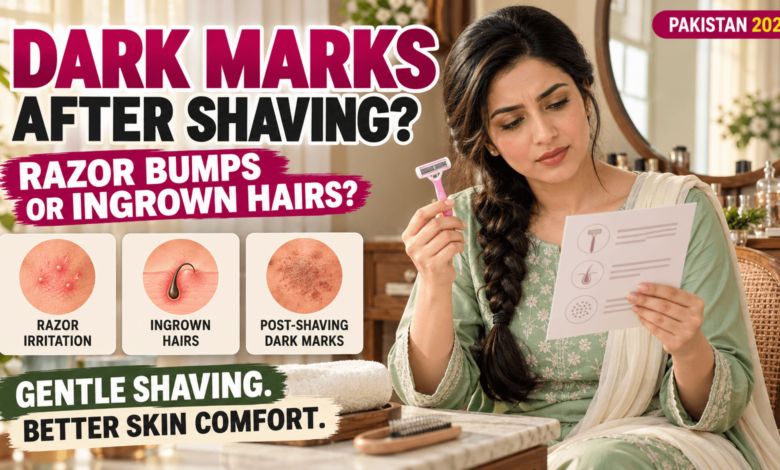
Razor Bumps, Ingrown Hairs & Prevention
Why marks appear
Shaving does not automatically make skin darker. For some people, however, repeated razor irritation can cause inflammation, and the skin may remain darker after that irritation settles. This is known as post-inflammatory hyperpigmentation (PIH). It can be more noticeable in medium to deeper skin tones, although it affects people across skin tones. The inner thighs can be especially sensitive because clothing and movement may add friction after hair removal.
The role of razor bumps and ingrown hairs
Razor bumps may develop when closely cut hairs curl back toward the skin or become trapped as they grow. Tenderness, itching and small inflamed bumps can follow. Picking at bumps, shaving repeatedly over the same spot or scratching can increase irritation. A dark mark may linger even when the original bump is gone. Painful, pus-filled or repeatedly recurring bumps deserve medical advice rather than home extraction.
Common habits that worsen irritation
Dry shaving, using dull blades, pressing hard and shaving against hair growth can be uncomfortable for people prone to bumps. Multiple razor passes over one area can add to the problem. Shaving immediately before prolonged walking in tight trousers may also expose recently groomed skin to unnecessary rubbing. Sweat itself does not directly cause pigmentation, but moisture and friction together may aggravate chafing.
A gentler approach
Start with intact, comfortable skin. Soften hair with lukewarm water, use an appropriate shaving lubricant and choose a clean, sharp razor. Shave gently in the direction of hair growth when possible, and avoid stretching the skin for an extremely close shave. Rinse carefully and pat dry rather than rubbing with a towel. If close shaving repeatedly triggers bumps, a guarded electric trimmer may be worth considering. Avoid shaving over inflamed or broken skin.
What to do after shaving
Post-shaving care should prioritize comfort. Wear clothing that does not rub excessively, change out of damp garments when practical and avoid aggressive scrubs. Do not apply exfoliating acids or potentially irritating brightening formulas to freshly inflamed, cut or sensitive skin. A simple fragrance-free moisturizer suitable for intact external skin may be helpful if tolerated. There is no universal waiting period for active cosmetics: follow the label and wait until skin has recovered.
Understanding dark marks
Existing post-inflammatory marks can take months to improve, and there is no guaranteed timetable. Preventing new inflammation is important, but persistent darkening may have other causes. For a detailed explanation of razor irritation, ingrown hairs and post-shaving pigmentation, see the guide to dark inner thighs after shaving in Pakistan. The guide explains how irritation and pigmentation differ and offers practical prevention steps.
Where cosmetic skincare fits
Once external skin is intact and comfortable, some people consider cosmetics designed for uneven-looking tone. Products containing niacinamide or alpha arbutin may be relevant, but they do not treat razor bumps or prevent rubbing. The SKINDROPS Private Parts Lightening Cream is intended for suitable external areas and contains cosmetic brightening ingredients, including niacinamide and alpha arbutin. It is not for active irritation, broken skin or internal intimate areas. Follow product instructions and avoid combining multiple exfoliants without guidance.
When to seek professional advice
Darkening that appears suddenly, spreads, becomes thick or velvety, or comes with significant discomfort should be evaluated by a qualified healthcare professional. Similarly, infected or recurring ingrown hairs need appropriate assessment. The practical priority is simple: prevent unnecessary irritation first, then consider gentle cosmetic care with realistic expectations.