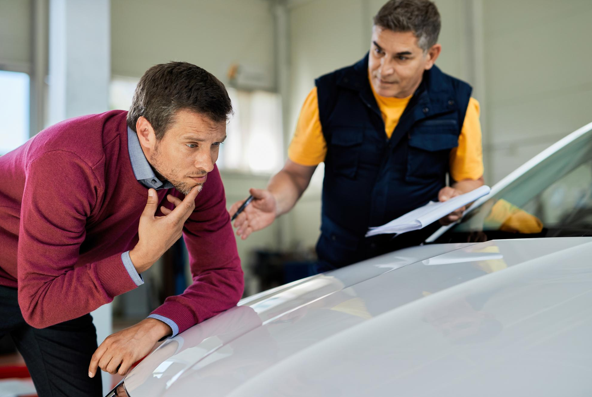
In Australia, car owners deal with vehicle damage by assessing the intensity of the damage, whether it is major structural damage or just a light scratch.
If the damage is a light scratch, minor dent, or clear coat scratch that can’t be felt through finger tips, a DIY repair method is enough. But when the damage is intense enough to expose the base metal, professional repair service is required.
Key Takeaways
- Whether the car needs DIY or professional repair service, that depends on the intensity of the damage.
- Minor damages, like a clear coating scratch or a minor dent, can be fixed by DIY methods.
- Major damages, such as metal scratches, rust, sharp creases, and corrosion, need professional fixing.
How to Understand Car Surface Damage: The Visual Assessment Guide
To repair the damaged car, you need to understand the intensity of the damage, whether it is a light scratch or structural damage.
See also: Streamlining Checkout Processes with Modern Scanning Technology
Anatomy of Australian Car Paint: Clear Coat, Primer, and Base Metal
In Australia, cars face high UV exposure, which makes the multi-layered automotive car paint and Hail Dent Removal essential to prevent hail damages and premature fading. Maintaining a factory finish is also important because it indicates the vehicle’s history, which is important for the resale value.
Base Metal
This provides the shape and structural integrity to the vehicle, often made out of stamped sheet steel and aluminium panels.
Primer
It is the first layer of actual paint, sprayed directly on the base metal. It protects the metal against rust and makes the surface compatible enough so that the colour can adhere to it.
Base Coat
The base coat could be solid, metallic, or pearlescent. It is only there for the visual aesthetic.
Clear Coat
This transparent, unpigmented layer is sprayed over the base coat. It protects the car against UV rays, bird droppings, tree sap, chemical interaction, and light scratches.
The Fingernail Test: Categorizing Scratches by Depth
To measure the depth of a scratch on the vehicle body, the fingernail test is an industry-standard method.
Clear Coat Scratches (Superficial)
These types of scratches look like a fine line, a faint haze, or a cobweb. You can’t likely catch the scratch with your fingertips. It affects only the topmost layer of the paint.
Base Coat Scratches (Paint Layer)
These scratches expose the colour layer of the vehicle. You can catch the scratch with your fingertip, but the edges are not usually sharp.
Primer and Metal Scratches
These types of scratches expose the base metal of the vehicle. They need professional repair.
Categorising Dents: From Shopping Trolley Dings to Severe Creases
Dents are categorised by their depth, shape, and whether the paint is broken, ranging from minor dings to severe structural creases.
Door Dings & Shopping Trolley Dents
These are common types of minor dents often caused when another vehicle door is opened onto your vehicle, or a shopping trolley bumps into your car.
These dents usually don’t cause any intense damage, but are still noticeable.
Crease Dents
These long and narrow dents are caused when a bicycle handlebar or a tree branch drags across the car. Crease dents usually affect the metal of the car.
Hail Dents
When hailstones hit the surface of the car, these dents occur. PDR is usually the best way for hail dent removal.
What Are The Smart Solutions for Car Scratch Repairs?
To repair minor to major car scratches, there are some smart solutions to follow.
When is a DIY Scratch Repair Safe?
If the damage is minor, like a paint scuff, surface swirl, or a clear coat scratch, it can be safely repaired with a DIY method. Instead of searching “Dent and Scratch Repair near me” online, many car owners in Australia opt for a DIY repair method for minor damage.
Professional Scratch Repair
If the scratch exposes the base metal of your car, you might need professional service. When the base metal is affected, to restore the factory finish, thorough cleaning, paint layering, wet sanding, and clear-coat sealing are required.
Modern Dent Removal Techniques: PDR vs. Traditional Panel Beating
Let’s compare the two.
What is Paintless Dent Removal (PDR) and How Does It Work?
Paintless dent removal is a highly skilled method by which technicians repair the minor dents and dings and hail dent removal from the vehicle’s body.
In this method, the metal is reshaped by gentle massaging techniques, which do not need sanding or repainting. The type of PDR methods to be used on the car depends on the base metal, whether it is steel or aluminium. As an aluminium panel has no shape of its own, the PDR methods used for it will be different.
Why is PDR the Gold Standard for Smart Car Owners?
- It preserves the original factory finish of the car.
- It is cost-effective as this process does not include professional methods, like sanding, priming, and painting.
- The process is less time-consuming.
- As the process does not include any chemical substances, PDR is usually an eco-friendly method.
When Traditional Panel Beating and Respraying Are Required?
If the damages are severe, such as cracked paint, sharp creases, deep dents, rust, or corrosion, traditional panel beating and respraying are necessary to fix the damages.
The whole process includes assessments to check the intensity of the damage, beating and shaping by using specialised hammers, dollies, and welders, sanding and filling to make the surface of the car smooth, priming, and respraying to achieve a factory-standard finish.
Are You Looking For Car Repair Service?
If you are looking for a professional car repair service, book the service from a well-reputed and trusted car repair service.