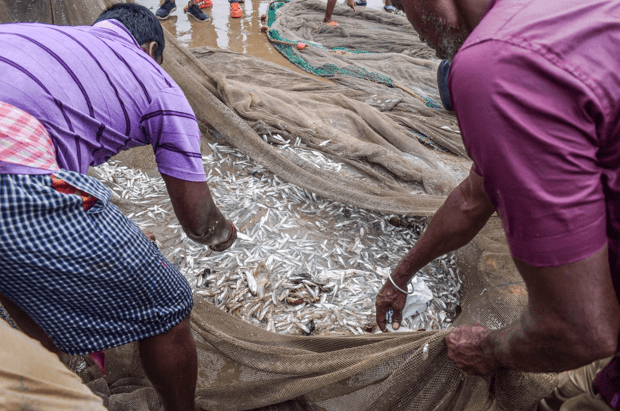
In India, for centuries fish has occupied centre stage, whether it is in the backwaters of Kerala or the coastal waters of Goa, or in the river delta dishes of West Bengal and Odisha fish is a taste, a scent, an identity. In recent years, this tradition is increasingly blended with new-age economic momentum and a new age economy, the fruits of which are spectacular. With Indian fish market projected to grow exponentially by more than 300%, data, published in March 2024, by Expert Market Research indicates the size of Indian fish market to be to be INR 2,073.79 Billion (in 2025) and further to be projected at INR 5,477.48 billion in 2035 at a CAGR of 10.20%, and this growth is led by: growing internal demand, increasing exports volume, support to the Fisheries sector by the govt of India and rising middle class seeking protein diet.
Why the India Fish Market Is on an Upward Trajectory
What are the major powers for sustained India fish market growth? Why and how do they affect market? When it comes to India market for seafood or marine products, what exactly are the major and sustained factors leading the way? Knowledge on these factors will equip various stakeholder like the fisherman, the processor to the retailer and investor to better decide the action they can or ought to take in the days and months to come.
- Indian consumers are shifting from their traditional high-carb diet to a more high-protein and low-fat diet due to the increasing population and growing health consciousness. Fish are one of the most affordable and nutrient rich food which makes them popular for everyone across different income groups. Middle class, which the urban middle class of India are increasing their spending on good quality food items. The expanding population of the growing urban middle class has an increasing disposable income, therefore leading to spending on high-quality food items like fresh or processed fish varieties.
- Increasing share of a well-organized retail and e-commerce channels in fish sales and distribution is expected to support the industry.
- The world’s third-largest fish-producing nation is India. Aquaculture has seen rapid growth, particularly freshwater fish farming, fuelled by improved techniques in breeding, better quality feed and effective disease management strategies. India the growth of the fish and seafood industry can also be attributed to the improved cold chain infrastructure. Facilities including refrigerated transport and processing units have reduced the loss from the catch and enabled better storage and distribution capabilities to tier-II and tier-III cities.
- The largest producer of fish in India is Andhra Pradesh (36%), West Bengal (13%) , Tamil Nadu (7.9%), Bihar (7.6%), Uttar Pradesh (6.8%), Gujarat (6.3%).
- India is amongst the world’s largest exporter of seafood, primarily frozen shrimp, surimi and dried fish. Major destinations for the exports are US, the EU, Southeast Asia, and Japan.
Key Segments Shaping the Market
By Fish Type
Indian fish market can be segregated into freshwater and marine varieties. Freshwater fish are mainly used for domestic consumption with prominent breeds being Rohu, Calta and Pangasius in the inland region. Marine fish, popular among coastal regions of the country and having good export potential include Pomfret, Mackerel, Hilsa, Tuna among others.
By Distribution Channel
Fish selling in India still occurs primarily in traditional wet markets and local fish vendors. Nonetheless, the modern organised retail supply channels that include hypermarkets, supermarkets and fish delivery startups such as Lucious, Big Basket and FreshToHome are seeing a faster uptake among fish consumers, especially in urban areas that increasingly seek ready-to-cook options including cleaned, marinated and cut pieces.
By Processing Type
Fresh and chilled fish are still the frontrunner in the domestic market but there has been a consistent rise in demand for frozen and processed fish. Value-added products like fish fillets, fish fingers, fish curry pastes, and ready-to-cook seafood packs are fast emerging as a strong choice amongst urban consumers who are on a hunt for something that is quick and at the same time offers a good culinary experience.
See also: Life Insurance Singapore
Government Initiatives Supporting the India Fish Market
The Indian government has recognized the importance of the fisheries sector and a few focused policies have been implemented to promote production, enhance infrastructure facilities and support the lives and livelihood of the millions belonging to fishermen communities.
- Prime Minister’s Fisheries Scheme Pradhan Mantri Matsya Sampada Yojana (PMMSY): At INR 20,050 crore outlay, this program promises production to the scale of 22 million mt by 2024-25, 5.5 lakh jobs and doubles fishermen’s income by way of development programs under its scheme, apart from setting up of 1.7 lakh jobs under e-Gopala and digital fisheries platforms.
- Fisheries Infrastructure Development Fund (FIDF): INR 7,522-crore fund is dedicated to modern fishing harbors, fish landing centers, ice plants and cold storages in the coastal as well as inland regions.
- E-Gopala and Digital Fisheries Platforms: Fishers can get daily updates about the weather condition in that region, fish location in terms of Sonar, GPS based tracking of fish using satellite, price in the market in their immediate vicinity through these platforms. This also gives assurance of predictable income from the venture, thereby significantly lowering the element of risk for fisheries as well.
- Blue Revolution (Neeli Kranti): A wide-ranging mission to develop marine, inland and aqua-culture fisheries is aimed at providing food security to our nation, creating employment and sustainable use of aquatic resources of our water bodies.
Challenges Facing the Sector
The fast pace of the growth for the Indian fish market also encounters various structural as well as environmental challenges, namely.
- Post-Harvest Losses: In India, we often lose between 20-30 percent of the fish catch as we lack a robust cold chain, and due to the absence of proper storage facilities and timely transportation, especially in interior locations.
- Overfishing & Sustainability Issues: Some maritime regions of the Indian ocean have witnessed unsustainable levels of fishing and thus a reduction in their fish stocks. There is a clear need for an increased regulation and implementation of fishing ban and practices promoting sustainable aquaculture.
- Climate Change Impact: Changes in sea surface temperature, inconsistent monsoon and ocean acidity threaten to affect marine fisheries and reduce potential catches. This impact poses a major concern to the sustainability of coastal communities whose lives depend on fishing.
- Fragmented Supply Chain: A lack of connectivity between fishermen and the consumers is forcing many fishers to compromise on profits and income as numerous middlemen are part of the supply chain. Efforts can be directed at creating alternative, direct-to-consumer supply chains, and encouraging the growth of co-operatives.
Frequently Asked Questions (FAQs)
Q1. What is the current size of the India fish market?
The fish market of India size reached the value of USD 2,073.79 billion in the year 2025 and it is anticipated to ascend at a CAGR of 10.20%, amounting USD 5,477.48 billion in the year 2035: Report by Expert Market Research.
Q2. Which states are the largest fish producers in India?
However, fisheries is an area where Andhra Pradesh was declared to be the highest fish-producing state with a major stake in aquaculture. While it was Andhra that ruled the roost, West Bengal, Kerala, Gujarat, Tamil Nadu and Odisha were right on its heels.
Q3. What are the most popular fish varieties consumed in India?
Common varieties of freshwater fish being eaten include Rohu, Calta, Mrigal and Pangasius. Marine variants which are the other favorites being served are Pomfret, Indian Mackerel, Hilsa, Tuna, and Sardines. India’s biggest seafood exporter – is Shrimp; and domestic demand is surging.
Q4. How is technology changing fish distribution in India?
As technology plays catch-up, Indian fish markets are also being restructured at multiple tiers. Online startups such as FreshToHome, and Lucious have already started providing the clean and diced fish at doorsteps. With GPS systems and sonar to find fish populations, modern techniques and tools are making fishing more effective for fisher folks. Digital platforms have eased connect between fish farms to fish buyers which results eliminate intermediaries and better profit margin for the farms.
Q5. What is India’s position in the global seafood export market?
India is among the world’s major seafood exporters, and it is 4th among the world’s seafood exporting countries based on volume of exports, with frozen shrimp having the largest export share value. The US, China, Southeast Asia and Europe Union are major destinations. India exports more than USD 7 billion worth of seafood annually in recent years.
Conclusion
India fish market: A Trillion Rupee Ocean for Business in the Offing India fish market is perhaps the most vibrant and highest potential markets within its food and agriculture sector, propelled by steadily rising consumer demand, intense push for aqua farming expansion, government reforms and increased export demand. The market which has been constantly growing and showing sustained development is on course to exceed multi trillion rupee marks over the coming decade. However, the full potential can only be tapped into by mitigating the current infrastructure bottlenecks in its cold chain, developing sustainable fisheries and ensuring all stakeholders in the supply chain benefit from its expansion.
Any investor, businessman or entrepreneur hoping to enter this market could clearly perceive clear indications that India Fish Market, with its growth trajectory, offers impressive long term Returns, data indicates.
In accordance with Expert Market Research, by 2035 it is anticipated that India fish market would more than double in value, presenting promising prospects to numerous entrepreneurs in the Fish & Fish Processing market-from, production & processing, logistics and retail to technology. Businesses that wish to understand this expanding sector whether a seafood brand, agritech entrepreneur or a policy planner would have to come in acquaintance with the complete India fish market and the forecasts furnished by Expert Market Research in depth and comprehensive report accessible at www.expertmarketresearch.com
.