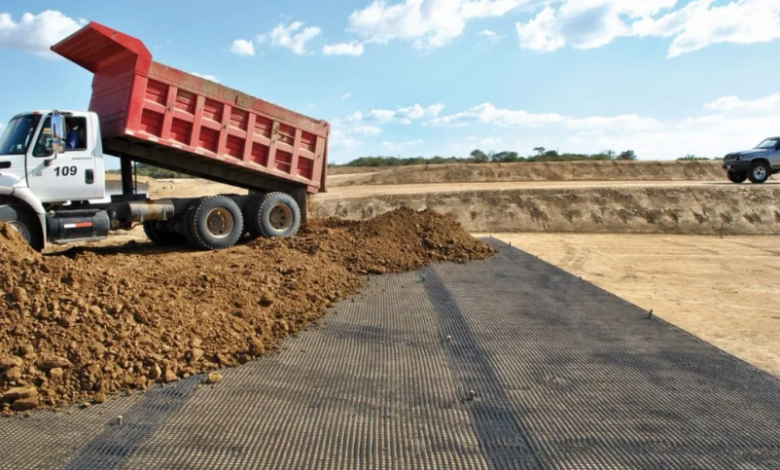
Soil stability is a fundamental concern in construction, landscaping, and civil engineering projects. Unstable or weak soil can cause structural settlement, erosion, and long-term damage, leading to costly repairs and safety risks. To address these challenges, modern reinforcement materials have become an essential part of engineering solutions.
Geotextiles, in particular, are widely used for improving soil performance. They enhance load distribution, prevent soil movement, and manage water flow, providing reliable support across a wide range of projects.
Understanding Soil Challenges in Construction
Soil exerts lateral and vertical pressure on structures such as retaining walls, slopes, and embankments. Environmental factors such as rainfall, freeze-thaw cycles, and added loads can intensify this pressure. Common challenges include:
• Uneven settlement and soil shifting
• Increased lateral stress behind walls
• Soil erosion and displacement
• Slope instability
Using proper reinforcement helps control these forces, ensuring the long-term durability and safety of structures.
The Role of Geotextiles in Soil Stabilization
Geotextiles are engineered fabrics designed to reinforce soil while allowing water to pass through. They serve multiple functions including separation, filtration, drainage, and reinforcement, making them essential in civil and environmental projects.
Types of Geotextiles: Geotextil Tejido y No Tejido
Geotextiles are typically classified into woven (tejido) and nonwoven (no tejido) types. Woven geotextiles consist of fibers interlaced in a grid-like pattern, providing high tensile strength and low elongation. Nonwoven geotextiles are made by bonding fibers together to create a fabric with excellent filtration and drainage properties.
Benefits of Each Type
Woven geotextiles
• High strength and load-bearing capacity
• Suitable for reinforcing roads and embankments
• Low elongation reduces soil movement
Nonwoven geotextiles
• Excellent drainage and filtration
• Prevents soil particle migration
• Ideal for erosion control, drainage layers, and environmental projects
Combining woven and nonwoven geotextiles allows engineers to leverage the advantages of both types for maximum soil stabilization.
Applications in Civil Engineering
Geotextiles are used in a wide range of projects due to their versatility and effectiveness.
See also: Reasons Your Business Should Switch to Online Fax Software
Roadways and Pavement Reinforcement
Weak subgrade soils often lead to pavement geotextil tejido y no tejido cracking, rutting, and early deterioration. Installing geotextil tejido y no tejido between the subgrade and base layer distributes traffic loads more evenly, reducing maintenance costs and extending pavement life.
Retaining Walls and Slopes
Retaining walls and slopes are exposed to constant lateral soil pressure. Using geotextile reinforcement stabilizes these areas, reduces lateral stress, and prevents soil erosion, resulting in safer and more durable structures.
Embankments and Bridges
For infrastructure projects such as embankments supporting bridges or highways, geotextiles reinforce soil layers, reduce settlement, and enhance load-bearing capacity. This ensures structural stability even under heavy traffic and environmental stress.
Environmental Protection and Erosion Control
Nonwoven geotextiles are widely used for environmental applications such as riverbank stabilization, shoreline protection, and landslide prevention. Their permeability allows water to flow while retaining soil particles, reducing erosion and environmental damage.
Installation Best Practices
Correct installation is critical to achieving the full benefits of geotextile reinforcement. Improper placement can compromise performance and reduce durability.
Preparing the Site
Clear the area of debris, roots, and sharp objects. A smooth, level surface ensures maximum contact between the geotextile and soil, improving reinforcement efficiency.
Placement and Overlap
Lay geotextiles flat with adequate overlap to prevent soil migration. Proper anchoring is essential to maintain continuity and stability during backfilling and compaction.
Backfill and Compaction
Use clean, well-draining backfill material to maintain drainage and prevent hydrostatic pressure. Gradual compaction ensures that geotextiles perform optimally and that soil layers remain stable.
Durability and Long-Term Advantages
Geotextil tejido y no tejido is resistant to moisture, chemical exposure, and biological degradation. When installed correctly and protected from sunlight, these materials can perform effectively for decades, reducing the need for repairs and supporting sustainable construction practices.
Cost Efficiency and Value
Although the initial cost of geotextile installation may be higher than traditional methods, the long-term benefits are significant. Reinforced soil structures require less maintenance, last longer, and perform reliably under environmental and mechanical stress. Combining woven and nonwoven fabrics can also optimize material use, reducing overall project costs.
Common Mistakes to Avoid
To ensure effective reinforcement, avoid these errors:
• Choosing the wrong type of geotextile for the project
• Neglecting site preparation
• Insufficient overlap or improper anchoring
• Using low-quality backfill or over-compacting the soil
Following proper design and installation guidelines ensures the geotextile performs as intended.
Environmental Benefits
Reinforced soil reduces erosion and sediment runoff, protecting surrounding land and waterways. Long-lasting installations reduce material waste and contribute to environmentally responsible construction practices.
Conclusion
The stability and longevity of soil-supported structures rely on effective reinforcement, proper drainage, and load management. Geotextil tejido y no tejido strengthens soil layers, distributes loads evenly, and allows for controlled water movement. Its combination of strength and permeability makes it suitable for roads, slopes, retaining walls, embankments, and environmental projects.
When installed correctly, geotextil tejido y no tejido ensures durable, safe, and cost-effective performance. Using these materials in construction and landscaping projects results in resilient structures capable of withstanding environmental and mechanical stresses for decades.