The sales pitch sounded almost too good to be true. “Install the panels and forget about them for 25 years.” A homeowner in Signal Hill heard this from two different solar companies when shopping for quotes. No maintenance, just decades of free electricity from the sun.
Seven years into his solar journey, he’s learned the reality is slightly more nuanced. His system works great, production remains strong, and he’d absolutely make the same decision again. But “zero maintenance” wasn’t quite accurate. A few small tasks each year keep everything running optimally. Ignoring them entirely would have cost him meaningful production over time.
So do solar roofs require maintenance? The honest answer: yes, but not much. Understanding what that “not much” actually involves helps homeowners know what they’re signing up for.
Why Solar Systems Need So Little Care
Solar panels are engineered for decades of outdoor exposure with minimal degradation. Understanding why they’re so durable helps explain why maintenance needs are genuinely minimal.
No moving parts means no mechanical wear. Compare solar panels to other energy equipment. Furnaces have blowers, ignitors, and heat exchangers that wear out. Air conditioners have compressors and fans. Hot water tanks have elements and anodes. Solar panels just sit there converting light to electricity with nothing to wear out through movement.
Solid-state electronics have inherent longevity. The photovoltaic cells generating electricity are semiconductor devices similar to computer chips. They don’t degrade through use the way mechanical components do. Normal operation doesn’t consume or wear out the active materials.
Weather-resistant construction handles decades of exposure. Tempered glass covers are the same material used in car windshields and sliding doors. Aluminum frames resist corrosion even in harsh environments. Encapsulation materials protect delicate cells from moisture and contaminants. Everything is designed for 25+ years outdoors.
This durability isn’t marketing spin. It’s engineering reality. Solar systems genuinely need far less attention than almost any other major home equipment.
The Cleaning Question
Panel cleaning generates more questions than any other maintenance topic. How often? Is it necessary? Does it really affect production? The answers depend on specific circumstances.
Rainfall provides natural cleaning for most installations. Calgary receives enough precipitation that ordinary dust and pollen accumulation gets washed away regularly. Panels tilted at typical roof angles shed water efficiently, taking contamination with it. Many Calgary systems go years without manual cleaning while maintaining strong production.
Certain conditions warrant active cleaning. Heavy bird activity deposits droppings that rain doesn’t remove easily. Extended dry periods allow accumulation that rain would normally handle. Locations near construction, industrial activity, or heavy traffic may see faster contamination buildup. Shallow roof pitches hold debris rather than shedding it.
Production monitoring reveals when cleaning is actually needed. A system producing 15 percent below expected on sunny days likely needs attention. One running within a few percent of normal probably doesn’t, regardless of how panels look from the ground. Let data guide cleaning decisions rather than assumptions.
When cleaning is needed, the process is straightforward. Water and a soft brush or squeegee handle most situations. Early morning cleaning on cool panels works best. Avoid abrasive materials, harsh chemicals, and pressure washers. Professional cleaning services are available for difficult access situations or homeowners who prefer not to handle it themselves.
See also: Return on Investment (ROI) for Home Solar Systems
Monitoring: Your Best Maintenance Tool
Production monitoring systems included with most modern solar installations are arguably more important than any physical maintenance activity. They reveal problems that no amount of visual inspection would catch.
Healthy systems establish recognizable production patterns. Daily peaks around solar noon. Seasonal variation from long summer days to short winter ones. Weather-related drops during cloudy periods. After a few months, homeowners develop an intuitive sense of what normal production looks like.
Sudden changes indicate problems needing attention. A system producing nothing when it should be active might have an inverter fault, tripped breaker, or connection failure. These problems aren’t visible from ground level but are immediately obvious in monitoring data. Quick detection means quick resolution and minimal lost production.
Gradual decline reveals developing issues. A system slowly producing less than expected might have soiling accumulation, developing equipment problems, or shade encroachment from growing trees. These trends are invisible day to day but clear when comparing monthly or yearly data.
Checking monitoring data weekly or monthly takes just minutes. It’s the single most valuable maintenance activity, catching problems at the earliest possible stage. The experts at Angels Roofing recommend making monitoring review a regular habit for all solar homeowners.
Don’t Forget the Roof Itself
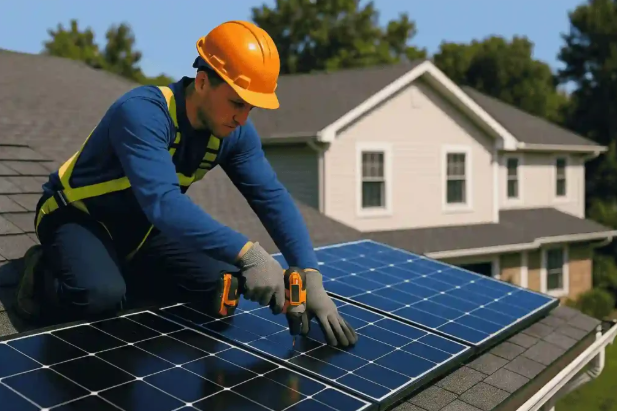
Solar panels sit on roofs, and roofs still need normal maintenance regardless of what’s attached to them. In fact, having panels makes roof attention more important, not less.
Panels obscure portions of the roof surface. The areas beneath panels can’t be visually inspected without removal. Problems could develop invisibly. This makes inspecting visible areas around and between panels even more important, watching for warning signs that might indicate hidden issues.
Mounting hardware penetrations require attention. The brackets attaching panels to the roof create penetrations through roofing material that must remain watertight. Quality installations include flashing and sealant at every penetration. Over time, sealants can degrade and flashing can work loose. Annual professional inspections should specifically evaluate mounting point integrity.
Panel edges can accumulate debris. Leaves, needles, and other organic material collect in the gap between panel edges and roof surface. This debris traps moisture against roofing materials, potentially promoting rot or algae growth. Periodic clearing of panel edges prevents accumulation from becoming problematic.
Gutter maintenance remains essential. Solar installations don’t change gutter cleaning requirements. If anything, gutters may need more attention because panels concentrate runoff into specific drainage paths rather than distributing it across the entire roof surface.
Managing Shade Over Time
Trees don’t stop growing just because someone installed solar panels. Vegetation management is an ongoing consideration for the life of the system.
A solar installation designed around existing vegetation may become shaded as trees grow. That oak that was ten feet from the roofline might extend branches over the panels within a few years. The evergreen on the property line might shoot up and start casting afternoon shadows where none existed before.
Annual shade assessment catches developing problems. Walk the property at different times of day, watching for shadows falling on panel areas. Compare current conditions to what existed when the system was installed. Growing shade means declining production that will continue worsening until addressed.
Tree trimming maintains the solar resource. Strategic pruning removes branches that have grown into shading positions while preserving the tree’s health and appearance. Professional arborists understand how to balance these objectives. The cost of periodic trimming is minimal compared to the production losses that unmanaged shade creates.
Neighbor trees complicate matters. Shade from adjacent properties affects your production but isn’t yours to manage unilaterally. Open conversation with neighbors about your solar system and their trees sometimes leads to cooperative solutions. Understanding exactly how much production loss neighboring vegetation causes helps determine whether it’s worth pursuing.
Calgary Weather Considerations
Local climate creates specific maintenance situations that don’t exist everywhere.
Snow on panels is a Calgary reality for several months each year. Snow-covered panels produce nothing, which can concern homeowners watching their system sit idle during winter storms. The instinct to clear snow is understandable but usually counterproductive. Climbing on snowy roofs is dangerous. Snow removal tools can damage panels. And snow naturally slides off or melts faster from dark panel surfaces than surrounding roof areas. Patience typically works better than intervention.
Hail requires post-storm attention. Quality solar panels meet impact resistance standards and handle moderate hail without issue. But Calgary experiences occasional severe hail events that exceed normal expectations. After significant hailstorms, visual inspection checks for obvious cracking or damage. Monitoring data reveals production impacts that might indicate damage not visible from the ground.
Chinook cycles stress equipment. The rapid temperature swings Calgary experiences stress seals, connections, and mounting hardware through repeated expansion and contraction. This stress accumulates over time. Annual inspection of visible mounting components and roof connections catches loosening or seal degradation before it causes problems.
Wildfire smoke seasons can deposit persistent residue on panels. Ash doesn’t wash off as easily as ordinary dust. Extended smoke events may warrant cleaning after air quality returns to normal, especially if monitoring shows production below expected levels.
What Homeowners Shouldn’t Do
Knowing what not to do is as important as knowing what to do. Some well-intentioned maintenance attempts cause more harm than good.
Never walk on panels. They’re not designed to bear concentrated weight and can crack under foot traffic. Damage might not be immediately visible but can cause progressive failure of the affected cells.
Avoid pressure washers entirely. The high-pressure spray can force water into panel seams and electrical connections where it causes damage. It can also strip protective coatings and damage seals.
Don’t touch electrical components. Inverters, combiner boxes, and wiring connections involve potentially dangerous voltages. Even simple-seeming tasks like resetting a tripped breaker should be approached with caution. Leave electrical troubleshooting to qualified professionals.
Skip the harsh chemicals. Ammonia, bleach, and abrasive cleaners can damage panel surfaces and coatings. Plain water handles almost all cleaning needs. Mild dish soap helps with stubborn spots. Anything stronger risks causing more harm than the contamination it’s meant to remove.
Don’t attempt panel repositioning or removal. Mounting systems are engineered for specific configurations. Moving panels affects load distribution and may void warranties. If panel position needs changing for any reason, that’s professional work.
When to Call Professionals
Some situations clearly require professional involvement rather than homeowner intervention.
Any electrical issue belongs to licensed electricians or certified solar technicians. Inverter faults, wiring problems, and connection failures involve hazards that require proper training and equipment to address safely.
Physical panel damage requires professional assessment. Cracks, chips, or broken glass may need panel replacement. Even damage that seems minor can affect performance and safety. Let qualified technicians determine appropriate responses.
Roof repairs under panels need coordinated handling. Panels must be safely disconnected and removed before roof work can proceed, then reinstalled afterward. This coordination between electrical and roofing trades requires planning and expertise from both sides. Contact experienced roofing professionals who understand solar system requirements when roof issues arise.
Unexplained production losses warrant investigation. If monitoring shows declining output without obvious cause, professional evaluation identifies whether the issue is equipment failure, installation problem, or something else requiring technical intervention.
The Bottom Line on Solar Maintenance
That Signal Hill homeowner summarizes his experience simply: “Way less work than my lawn, and way more reward.” His annual solar maintenance involves checking his monitoring app periodically, glancing at the panels when he’s in the backyard, and having his roof inspected by professionals who include the mounting points in their evaluation. Total time investment per year: maybe three hours if he’s being thorough.
Solar roofs do require maintenance. The sales pitch claiming otherwise stretched the truth. But the maintenance required is genuinely minimal, especially compared to the decades of electricity production the system delivers. A few hours of attention each year protects an investment that pays dividends for 25 years or more.
The homeowners who get the best results aren’t the ones doing the most maintenance. They’re the ones doing consistent basic maintenance and catching small issues before they become big problems. That’s a pretty good deal for decades of clean energy production.